

Publisher or integrator? Wich one to choose for a PIM solution
Introduction
Your data is scattered across multiple sources, and your teams waste time updating each product sheet and distributing them separately on ach of your sales channel. Your are lokking for a product management software solution to simplify the management and distribution of your data.
That’s why you are looking for a PIM/DAM solution for your company. But you are wondering what the difference is between a publisher and an integrator. Are you unsure who you should contact for the implementation of your project?
In this article, we explain why working with a publisher-integrator like Interactiv’ Technologies ensures better control over your project, from the budget to the timeline.
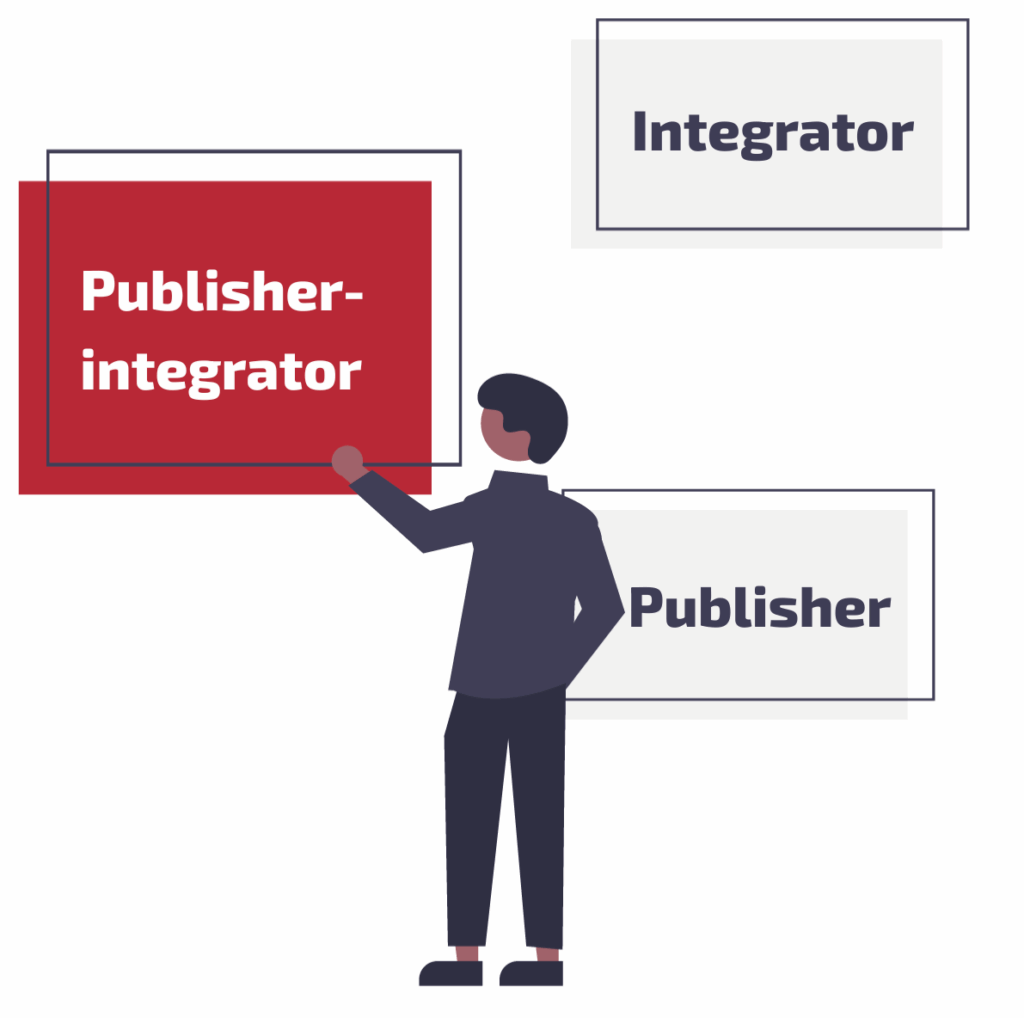
Definition of a software publisher
The role of a PIM software publisher is to design, develop, and market its PIM tool.
A publisher is also responsible for maintenance, updates, and technical support to ensure the tool functions properly in the long run. Finally, the publisher ensures the software’s compatibility with existing systems.
In other words, the publisher positions themselves as an expert of their own software, as they manage its entire lifecycle. In modern digital projects, this role also involves continuous technological monitoring to integrate new standards, protocols, and security best practices, ensuring a solution that remains state-of-the-art at all times. This enables them to anticipate future user needs and adapt their roadmap to ensure the sustainability and competitiveness of their solution.
💡At Interactiv’ Technologies, we are the publishers of our own software. Thanks to the technical expertise of our development team, we continuously enhance our solutions based on our clients’ needs.
Definition of a software integrator
Once the software is designed, an integrator steps in to deploy and customize it within your IT ecosystem.
The integrator acts as the intermediary between the publisher and you. Their role is to validate your specifications, configure, customize, and test the platform, which becomes part of your IT infrastructure. They also ensure its smooth operation by providing training and support to your teams, and, if necessary, adapting the configuration to optimize the tool based on your needs.
A PIM software integrator must also coordinate with other parts of your information system (ERP, e-commerce, DAM, CRM, etc.) to ensure fluid and consistent data flow. The integrator is also responsible for the quality of implementation: data structuring, analysis of the client’s historical processes and tools, change management support… all essential steps in the success of a PIM project.
💡 At Interactiv’ Technologies, we also act as the integrator of our own software. Our customers benefit from direct support from our team of consultants and product experts, from Monday to Friday, 9am to 6pm.
Easier Collaboration with a PIM publisher–integrator
Working with multiple stakeholders during the implementation of a PIM platform can lead to difficulties: extended timelines, misunderstandings, slow support…
Choosing a company like Interactiv’ Technologies, a single provider that is both the publisher and integrator of its solutions, offers many advantages. This “short-circuit” approach is especially effective for PIM projects, where data quality and speed of implementation are key to the performance of your information system.
Our advice for choosing your PIM provider
It is important to evaluate the provider’s ability to support your organization long-term and accommodate future changes in your product data needs before choosing a PIM solution.
To help you choose the partner who will support you in deploying a PIM/DAM solution like Interactiv’ Database, here is a non-exhaustive list of questions to consider to ensure project success:
- Expertise: Does the provider have in-depth knowledge of your product data challenges (print distribution, standardized exports like FAB-DIS or ETIM, website, etc.)? Do they have strong references in your sector or similar complex projects? Can they understand your business specifics and technical constraints?
- Support: Is there a support service? If yes, is it responsive? Are there training sessions for your team members? What do users say about their customer support? Don’t hesitate to check reviews of different providers to help guide your choice.
- Performance and scability: an the tool manage all your data and adapt if needed? Does the provider offer software updates and enhancements? Is the solution able to handle large data volumes, complex structures, or multilingual catalogs? A good PIM must evolve at the same pace as your digital strategy and omnichannel ambitions…
- Security and confidentiality: Where will your data be stored? Are customizable access restrictions available? What is their data backup policy?
- …
Feel free to compare multiple approaches to assess the flexibility, transparency, and commitment of different providers.

Where does Interactiv’ Technologies stand?
At Interactiv’ Technologies, we are both the French publisher and integrator of our software solutions. This dual expertise enables us to support more than 1,000 customers at every stage of their project: from design to integration, all the way to continuous upgrades—without any intermediaries. Our technical expertise is unified across our development, project, and support teams, who work together to ensure the best possible user experience.
If you are looking for a reliable partner to manage, automate, and distribute your product data, feel free to contact us to discover how our tools can meet your needs through a free personalized demonstration by one of our experts.
Reminder about the PIM
Interactiv’ DataBase PIM (Product Information Management) is software that centralizes, structures, and distributes product information across various channels (website, catalog, marketplaces, etc.). It manages both marketing data—such as product name and description—and technical data, such as weight, size, price, and visuals.
This essential tool for businesses improves data quality and consistency, enabling fast and reliable market distribution.